












Ratatouille recipe lovers, you’re in for a mouthwatering journey that goes far beyond the usual veggie medley. This article is your all-in-one guide to crafting the most irresistible, authentic, and deeply flavorful ratatouille recipe you’ve ever tasted. Inspired by tradition and perfected with passion, this French classic has captivated the hearts of chefs around the globe — and now, it’s your turn to master it.
But before we dive into prepping eggplant and zucchini, let us share why this means so much to us. Our About Page tells a deeper story — of passionate home cooks on a mission to make gourmet cooking accessible and joyful. We believe that with a few pantry staples, the right techniques, and a dash of creativity, anyone can transform simple ingredients into memorable meals. Ratatouille embodies that very spirit.
Whether you’re searching for a traditional ratatouille recipe, a ratatouille recipe with meat, or simply an easy ratatouille recipe that doesn’t compromise on flavor, this guide will walk you through everything — from ingredients and tips to plating like a pro.
Table of Contents
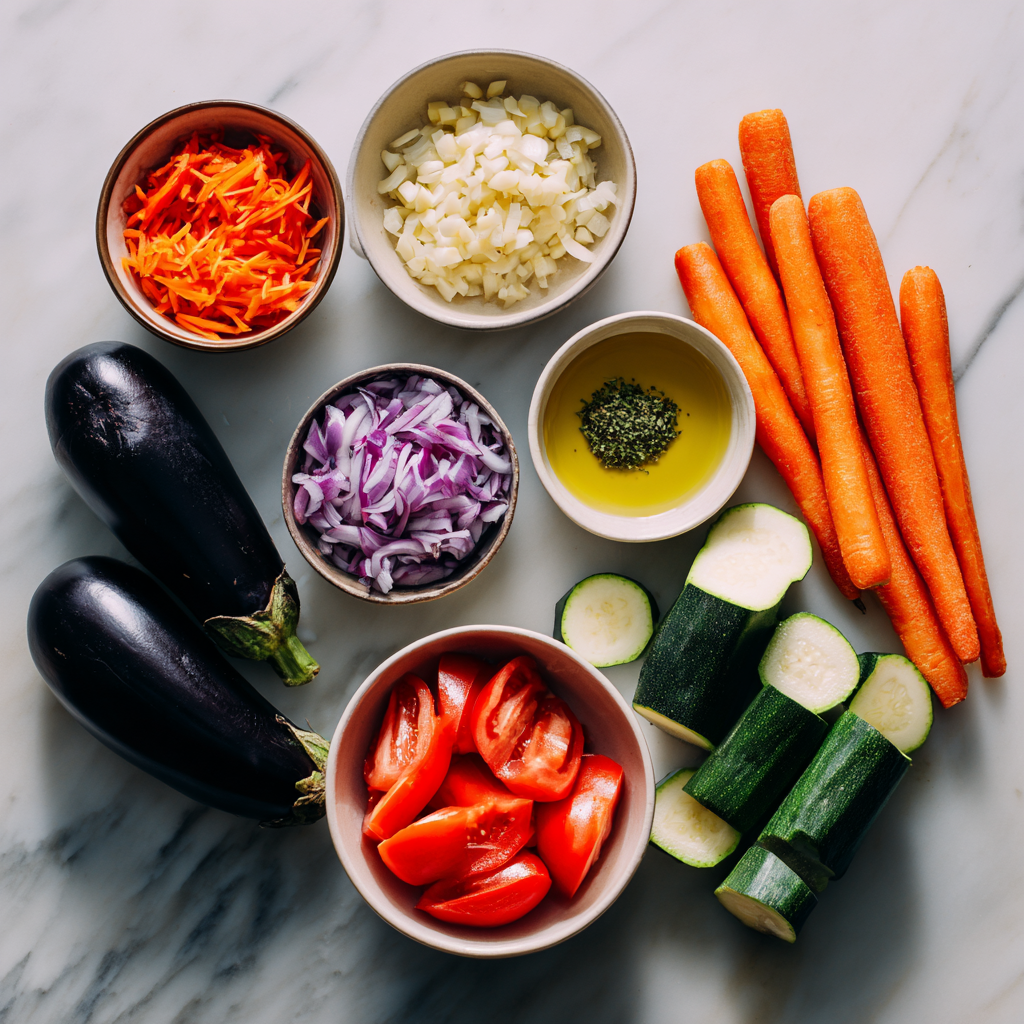 Ingredients ready for slicing and baking
Here’s what you’ll need:
Ingredients ready for slicing and baking
Here’s what you’ll need:
Choosing vegetables of uniform size helps maintain balance in taste and cooking time. While the traditional ratatouille recipe calls for eggplant, zucchini, and tomato, don’t be afraid to personalize your dish with seasonal produce or add-ins like bell peppers or squash.
Discover great ideas like this tomato-based stew that pairs beautifully with crusty bread.
 A gourmet twist on classic ratatouille
 Here’s how to do it right:
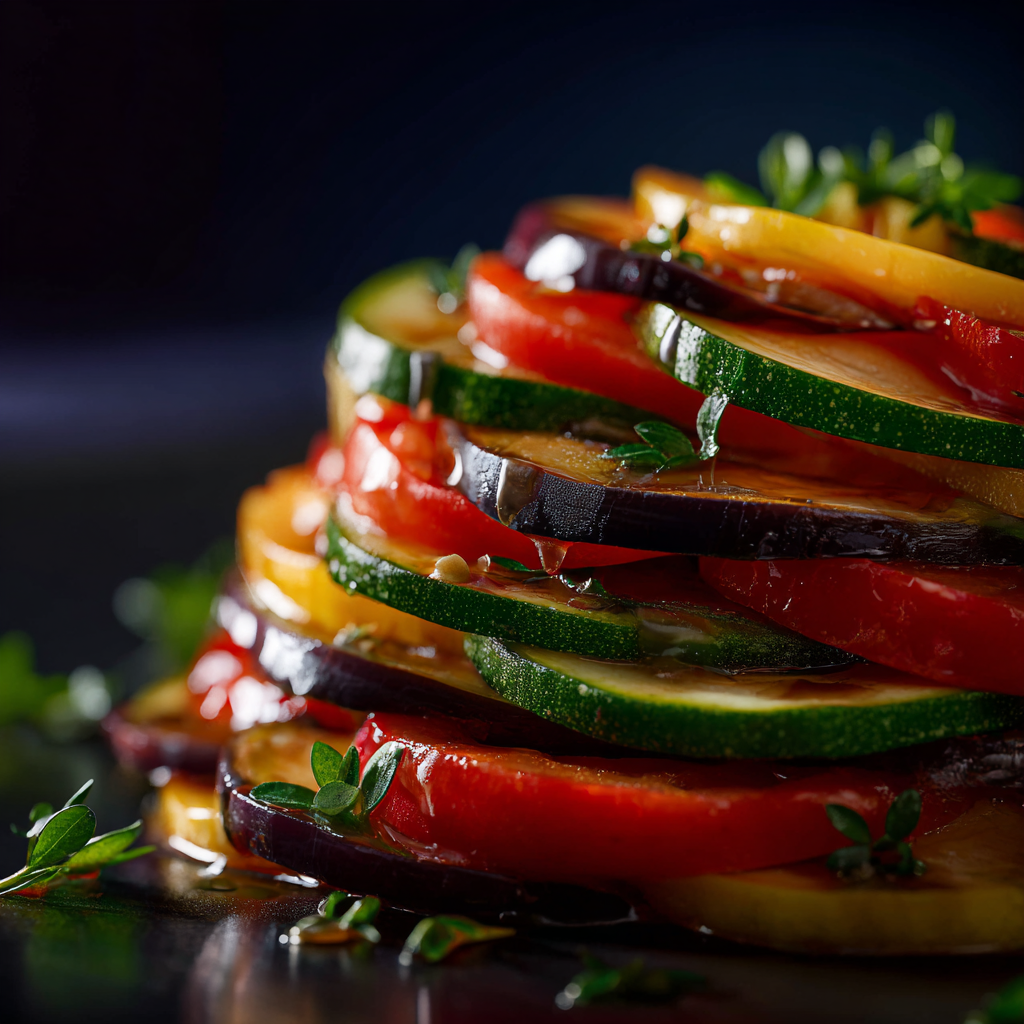 A gourmet twist on classic ratatouille
While anyone can follow a ratatouille recipe, true culinary magic happens in the details. Whether you’re chasing that dreamy, perfectly layered look or the deep flavor of a stovetop classic, these insider tips will ensure your dish is far from ordinary.
Here’s how experienced chefs and home cooks alike elevate their ratatouille from a simple veggie bake to a masterpiece:
A gourmet twist on classic ratatouille
While anyone can follow a ratatouille recipe, true culinary magic happens in the details. Whether you’re chasing that dreamy, perfectly layered look or the deep flavor of a stovetop classic, these insider tips will ensure your dish is far from ordinary.
Here’s how experienced chefs and home cooks alike elevate their ratatouille from a simple veggie bake to a masterpiece:
Wine Pairing? A medium-bodied red like a Grenache or Syrah works beautifully. Prefer white? Go for a dry Sauvignon Blanc to brighten the tomato base.
And for those exploring the ratatouille recipe with meat, consider pairing with rosemary roasted potatoes or even buttered noodles — hearty sides that soak up every bit of sauce without stealing the show.
Looking for inspiration? Try these wine pairing suggestions that elevate everyday meals.
With the right pairings, your ratatouille isn’t just a dish — it becomes the centerpiece of an unforgettable meal.
For an alternate twist on this French staple, this homemade ratatouille recipe shows a rustic version that’s perfect for casual weeknight meals or elegant plating alike.
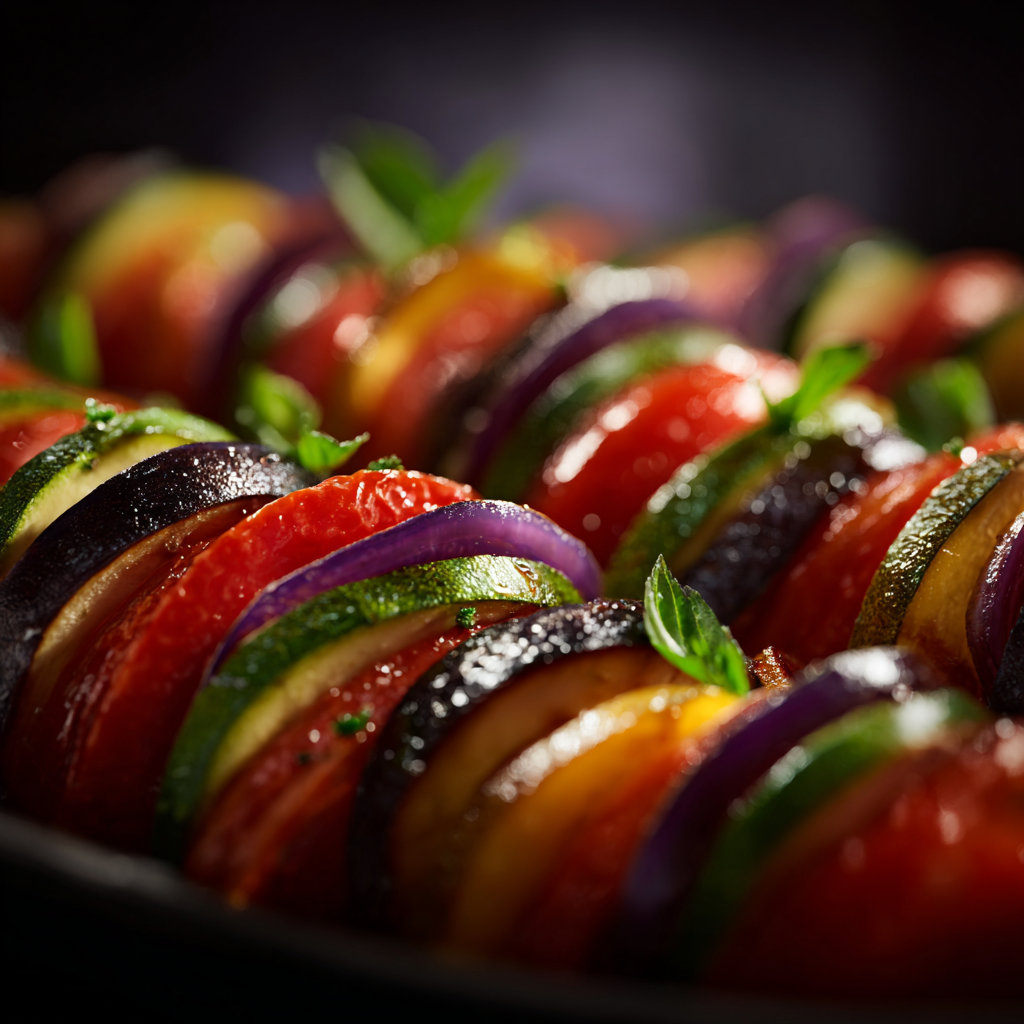 Ratatouille containers prepped for the week
What started as a humble vegetable stew in the southern regions of France has now become a globally recognized symbol of wholesome, artistic cuisine. The ratatouille recipe, in all its forms, is deeply embedded in culinary history — yet remains just as relevant and captivating today.
Traditionally made by farmers looking to preserve their harvest, the dish was celebrated for its simplicity and resourcefulness. Eggplant, zucchini, and tomatoes were abundant in summer months, and this recipe made excellent use of them all. But the ratatouille journey didn’t end in the fields.
Its rise from rustic roots to mainstream spotlight has made it one of the most searched and celebrated vegetarian dishes on the internet — from traditional ratatouille recipe Italian-style to creative adaptations that include everything from tofu to sausage.
Check out our historical breakdown of Mediterranean classics reinvented for the modern cook.
Ratatouille containers prepped for the week
What started as a humble vegetable stew in the southern regions of France has now become a globally recognized symbol of wholesome, artistic cuisine. The ratatouille recipe, in all its forms, is deeply embedded in culinary history — yet remains just as relevant and captivating today.
Traditionally made by farmers looking to preserve their harvest, the dish was celebrated for its simplicity and resourcefulness. Eggplant, zucchini, and tomatoes were abundant in summer months, and this recipe made excellent use of them all. But the ratatouille journey didn’t end in the fields.
Its rise from rustic roots to mainstream spotlight has made it one of the most searched and celebrated vegetarian dishes on the internet — from traditional ratatouille recipe Italian-style to creative adaptations that include everything from tofu to sausage.
Check out our historical breakdown of Mediterranean classics reinvented for the modern cook.
Many followers of the ratatouille recipe with meat also enjoy reheating portions alongside grilled chicken or using it as a flavorful meat sauce base.
Discover great ideas like these in our 5-day vegetarian meal prep planner.
By planning ahead, one batch of ratatouille becomes a week’s worth of meals — colorful, comforting, and endlessly customizable.
Prefer something with international flair on the side?
Check out this Crockpot Thai Peanut Chicken that pairs beautifully with plant-based dishes like ratatouille.
Table of Contents
- Ingredients & Tools for the Perfect Ratatouille Recipe
- Selecting the Right Vegetables for Authentic Flavor
- Essential Kitchen Tools You’ll Need
- Step-by-Step Instructions to Make Ratatouille Like a Pro
- Preparing the Savory Tomato Base
- Arranging and Baking the Vegetables for Perfect Texture
- Ratatouille Recipe Variations for Every Preference
- Traditional Ratatouille Recipe: The Rustic Provençal Method
- Ratatouille Recipe with Meat: Boosting Protein and Heartiness
- Expert Tips for the Best Ratatouille Recipe Every Time
- Proven Techniques to Transform Your Ratatouille Recipe from Good to Great
- Pitfalls to Avoid When Cooking Ratatouille
- Serving Ideas and Perfect Pairings for Ratatouille
- How to Plate Ratatouille Like a Professional
- What to Serve with Ratatouille: Perfect Pairings
- Ratatouille Recipe Through Culture & Media
- From French Countryside to Global Fame
- Julia Child to Jamie Oliver: Culinary Icons Love Ratatouille
- Ratatouille in Pop Culture: From Dreamlight Valley to the Big Screen
- Storing, Reheating & Meal Prep Tips for Ratatouille
- Best Practices for Storing Leftover Ratatouille
- Reheating Without Losing Flavor or Texture
- Meal Prep Tips: Ratatouille All Week Long
- Frequently Asked Questions About Ratatouille
- What is the best time to take ratatouille for a meal?
- Is this ratatouille recipe easy enough for beginners?
- Which version is the best ratatouille recipe?
- Watch How To Make Ratatouille Recipe
Ingredients & Tools for the Perfect Ratatouille Recipe
Print
clock iconcutlery iconflag iconfolder iconinstagram iconpinterest iconfacebook iconprint iconsquares iconheart iconheart solid icon


Disclosure: This post contains affiliate links.If you click and make a purchase, I may earn a small commission at no extra cost to you.
Milk Frother
Buy Now →
Meat Thermometer
Buy Now →
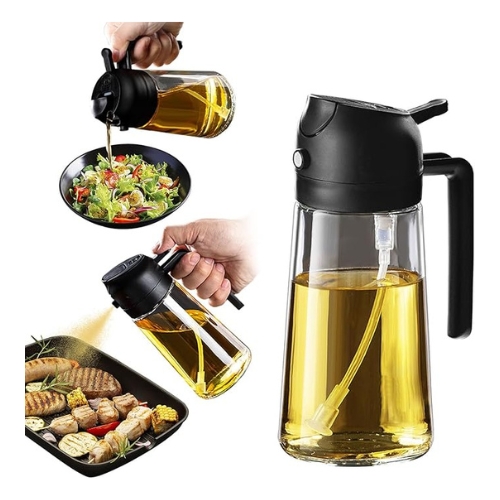
Olive Oil Sprayer
Buy Now →
Irresistible Ratatouille Recipe That’ll Make You Fall in Love with Vegetables
5 Stars 4 Stars 3 Stars 2 Stars 1 Star
No reviews
- Author: Olivia
- Total Time: 50 minutes
- Yield: 4 servings
- Diet: Vegan
Print Recipe
Pin Recipe
Description
Ratatouille is a classic French vegetable medley made with layers of zucchini, eggplant, bell peppers, tomatoes, onions, and garlic, gently simmered or baked in olive oil and herbs. This dish is both rustic and elegant, perfect as a main or side and naturally vegan and gluten-free.
Ingredients
- 2 tablespoons olive oil
- 1 small eggplant, diced
- 1 zucchini, sliced into thin rounds
- 1 yellow squash, sliced into thin rounds
- 1 red bell pepper, diced
- 1 yellow bell pepper, diced
- 1 onion, chopped
- 3 cloves garlic, minced
- 4 large ripe tomatoes, chopped (or 1 can crushed tomatoes)
- 1 teaspoon dried thyme
- 1 teaspoon dried basil
- Salt and pepper to taste
- Fresh parsley or basil for garnish
Cook Mode Prevent your screen from going dark
Instructions
- Heat 1 tablespoon of olive oil in a large skillet or Dutch oven over medium heat. Add the chopped onion and garlic, and cook until translucent, about 5 minutes.
- Add bell peppers and cook for another 3–4 minutes until slightly softened.
- Stir in the eggplant and cook for 5–6 minutes, adding more oil if needed.
- Add zucchini and yellow squash. Sauté for 3–4 more minutes, then stir in chopped tomatoes (or canned tomatoes), thyme, basil, salt, and pepper.
- Reduce heat to low, cover, and simmer for 20–25 minutes, stirring occasionally, until all vegetables are tender and flavors meld.
- Uncover and simmer an additional 5–10 minutes to let excess moisture evaporate if needed. Taste and adjust seasoning.
- Serve warm or at room temperature, garnished with fresh parsley or basil. Great as a side dish, over rice, or with crusty bread.
Notes
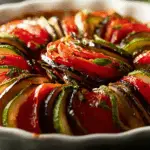
- For a visually stunning version, layer thinly sliced vegetables in a spiral pattern and bake.
- Add a splash of balsamic vinegar or red wine for extra depth.
- Ratatouille is even better the next day after flavors deepen.
- Serve with polenta, pasta, or as a topping for grilled meats or tofu.
- Prep Time: 15 minutes
- Cook Time: 35 minutes
- Category: Main or Side
- Method: Stovetop
- Cuisine: French
Nutrition
- Serving Size: 1 cup
- Calories: 130
- Sugar: 8g
- Sodium: 260mg
- Fat: 7g
- Saturated Fat: 1g
- Unsaturated Fat: 6g
- Trans Fat: 0g
- Carbohydrates: 15g
- Fiber: 5g
- Protein: 3g
- Cholesterol: 0mg
Did you make this recipe?
Share a photo and tag us — we can’t wait to see what you’ve made!
Selecting the Right Vegetables for Authentic Flavor
The magic of a ratatouille recipe lies in the freshness of its ingredients. While there are several interpretations — from the classic traditional ratatouille recipe Italian-style to the modern spiralized or layered varieties — the essence remains rooted in Mediterranean produce.Ingredients ready for slicing and baking
Here’s what you’ll need:
| Ingredient | Quantity | Purpose |
|---|---|---|
| Olive Oil | 4 tbsp (divided) | Enhances richness & brings out veggie flavors |
| Garlic | 4 cloves, minced | Adds depth and aromatic complexity |
| Onion | ½ small, chopped | Builds the savory base |
| Carrot | ⅓ cup, shredded | Sweet undertone that balances acidity |
| Crushed Tomatoes | 14 oz | Essential for the robust sauce |
| Dried Basil | 2 tsp | Brings a warm, herbal lift |
| Dried Parsley | ½ tsp | Adds brightness |
| Eggplant | 1 small, sliced in ⅛ inch rounds | Absorbs flavors while providing texture |
| Zucchini | 2 small, sliced in ⅛ inch rounds | Mild taste, tender bite |
| Roma Tomatoes | 3, sliced in ⅛ inch rounds | Juicy acidity to round it all out |
| Salt & Black Pepper | To taste | Final flavor adjusters |
Essential Kitchen Tools You’ll Need
To execute the best ratatouille recipe, the tools you use can make a world of difference. Here’s a quick checklist:- 2-quart baking dish: This is key to getting that beautiful upright arrangement.
- Mandoline slicer or sharp knife: Ensures thin, even slices for perfect cooking.
- Nonstick pan: A must for sautéing without sticking or burning.
- Pastry brush: Handy for brushing olive oil over the arranged vegetables.
- Aluminum foil: Keeps steam in during the first half of baking for tender veggies.
- Oven thermometer (optional): Makes sure you hit the sweet spot at 375°F.
Step-by-Step Instructions to Make Ratatouille Like a Pro
A gourmet twist on classic ratatouille
Preparing the Savory Tomato Base
Every unforgettable ratatouille recipe starts with a sauce that ties all the vegetables together — not just as a background element, but as a star in its own right. This base is bold, savory, and fragrant.
Here’s how to do it right:
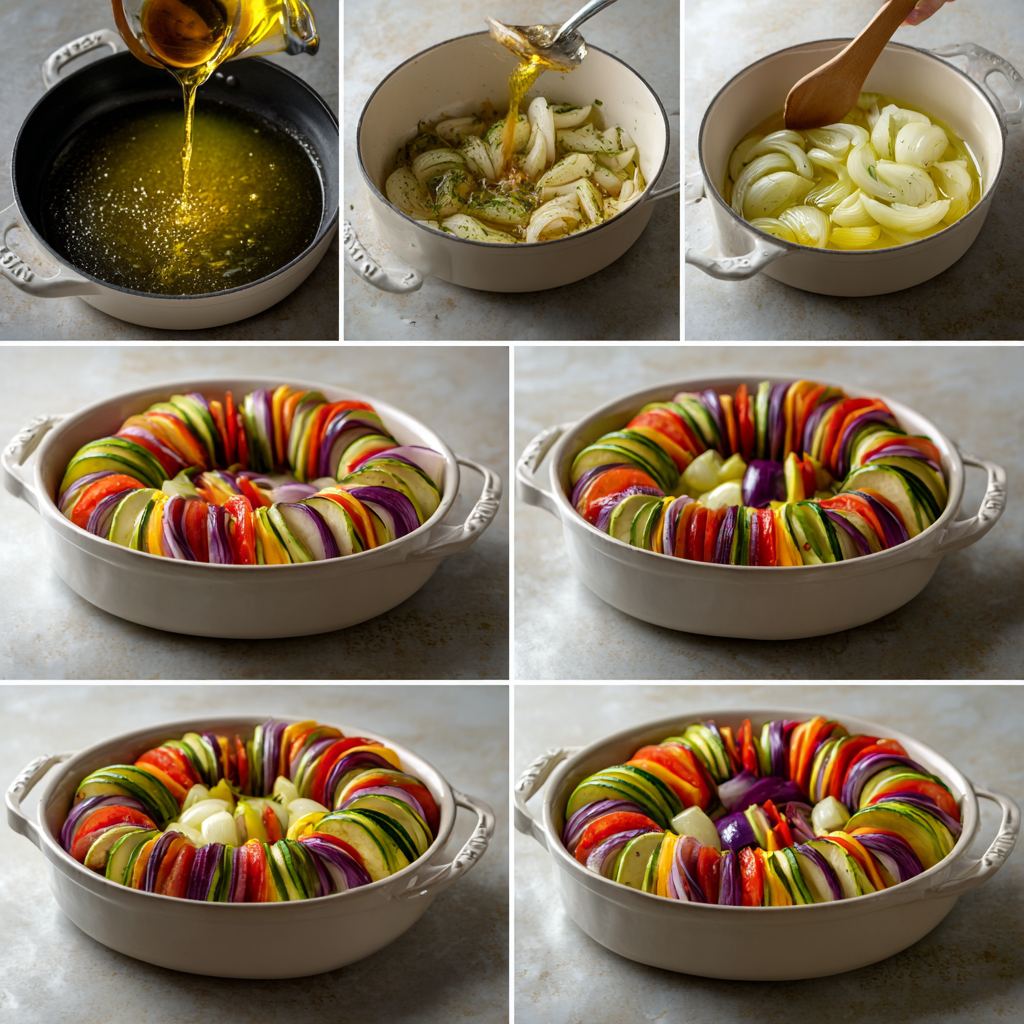
- Preheat your oven to 375°F (190°C).
- In a large nonstick pan, heat 2 tablespoons of olive oil over medium-high heat.
- Add in the chopped onion, minced garlic, and shredded carrot.
- Sauté for about 5 minutes, until the mix is soft and aromatic.
- Add in the crushed tomatoes, basil, and parsley.
- Let the mixture simmer gently for 15 minutes, stirring occasionally.
- Taste and adjust seasoning with salt and black pepper to balance sweetness and acidity.
- Once thickened, pour the sauce into a 2-quart baking dish, spreading it evenly.
Arranging and Baking the Vegetables for Perfect Texture
The visual payoff of a ratatouille comes in this step. Whether you’re recreating the iconic ratatouille recipe Julia Child shared with the world or your own artistic spin, here’s how to get it right:- Arrange the sliced eggplant, zucchini, and Roma tomatoes in alternating patterns. Stand them upright in a circular spiral or layered fan design. Keep it snug so the slices hold each other up.
- Use a pastry brush to apply the remaining 2 tablespoons of olive oil evenly over the top.
- Cover the dish with aluminum foil.
- Place it in the oven and bake for 30 minutes.
- After 30 minutes, remove the foil and continue baking for another 15–20 minutes, or until the vegetables are tender and lightly golden.
Ratatouille Recipe Variations for Every Preference
Traditional Ratatouille Recipe: The Rustic Provençal Method
The traditional ratatouille recipe has its roots deep in the heart of Provence, France — where vegetables were plentiful, meat was sparse, and every home had a pot simmering with love. Instead of the modern oven-baked version, the traditional method involves cooking each vegetable separately to preserve its unique texture:- Sauté eggplant in olive oil until golden and set aside.
- Repeat with zucchini and bell peppers if used.
- Cook onions, garlic, and tomatoes in a separate pan.
- Combine everything gently and simmer together, layering the flavors.
- Finish with fresh herbs like thyme, basil, or parsley.
Ratatouille Recipe with Meat: Boosting Protein and Heartiness
While ratatouille is typically vegetarian, adding meat gives it a hearty twist. Here’s how to do it without overpowering the vegetables:- Italian Sausage or Ground Turkey: Sauté separately, then mix into the tomato base before layering your vegetables.
- Grilled Chicken: Dice and scatter over the sauce before adding sliced veggies.
- Lamb Chunks or Ground Beef: Brown first and drain excess fat; the richness pairs beautifully with the tomato and herbs.
Expert Tips for the Best Ratatouille Recipe Every Time
Proven Techniques to Transform Your Ratatouille Recipe from Good to Great
A gourmet twist on classic ratatouille
While anyone can follow a ratatouille recipe, true culinary magic happens in the details. Whether you’re chasing that dreamy, perfectly layered look or the deep flavor of a stovetop classic, these insider tips will ensure your dish is far from ordinary.
Here’s how experienced chefs and home cooks alike elevate their ratatouille from a simple veggie bake to a masterpiece:
- Pre-treat Your Eggplant: Eggplant can be bitter if used raw. To fix that, sprinkle slices with salt and set them aside for about 20 minutes. This draws out moisture and softens the texture, leading to a more tender, melt-in-your-mouth finish after baking.
- Sauté for Extra Depth: Though not required, lightly pan-searing the zucchini, eggplant, and tomato slices before layering intensifies their natural sweetness and gives them a lovely golden edge. It’s a small step with big flavor rewards.
- Finish with Fresh Herbs: While dried herbs build flavor during cooking, nothing beats the brightness of chopped basil, parsley, or thyme sprinkled on top just before serving. It wakes up the dish with fresh aroma and color.
- Let It Sit Before Serving: Straight out of the oven, your ratatouille is still developing its character. Give it 10–15 minutes to rest and cool slightly—this helps the flavors settle and deepen, making every bite more satisfying.
- Precision Slicing: This isn’t the time for uneven cuts. Use a mandoline slicer or a very sharp knife to create thin, consistent slices—around ⅛ inch. It ensures the veggies cook evenly and layer beautifully in the dish.
Pitfalls to Avoid When Cooking Ratatouille
Even the most enthusiastic cook can miss a few key points when making ratatouille. Here are common mistakes you’ll want to sidestep to ensure the best results:- Too Tightly Packed Vegetables: If the vegetables are crammed together in the dish, they’ll steam instead of roast. That leads to a soggy texture rather than the tender, slightly crisp bite we’re going for.
- Skipping the Simmer on Your Sauce: It may be tempting to pour the tomato base into the dish right away, but don’t rush it. Letting it simmer gives the herbs and aromatics time to blend into a rich, savory base.
- Using Under-ripe Veggies: The whole point of ratatouille is to highlight the natural flavor of fresh produce. If your zucchini or tomatoes aren’t ripe, your dish will lack the depth it needs.
- Not Seasoning Each Layer: It’s not just the sauce that needs salt and pepper. A light sprinkle on each layer of veggies as you build your dish ensures every bite is balanced and flavorful.
Serving Ideas and Perfect Pairings for Ratatouille
How to Plate Ratatouille Like a Professional
A well-made ratatouille recipe deserves more than a spoon on a plate — it deserves a spotlight. Whether you’re entertaining guests or treating yourself to a quiet night in, presentation makes a difference. Here’s how to make it look as good as it tastes:- Go Vertical: If you layered your ratatouille in a spiral or tower, serve it directly in the baking dish or carefully lift slices with a spatula to maintain the structure on each plate.
- Drizzle with Olive Oil: A light finish of extra virgin olive oil on top adds shine and richness.
- Top with Fresh Herbs: Sprinkle chopped basil or parsley for a pop of color.
- Add a Side Dollop: Place a spoonful of Greek yogurt, ricotta, or herbed goat cheese on the side for a creamy contrast.
What to Serve with Ratatouille: Perfect Pairings
One of the beauties of ratatouille is how versatile it is — it can be a side dish, a main, or part of a larger feast. Here are ideal pairings depending on how you’re serving it:| Occasion | Pairing | Why It Works |
|---|---|---|
| Light Lunch | Crusty sourdough or French baguette | Sops up all that tomatoey goodness |
| Hearty Dinner | Herbed couscous or wild rice | Adds texture and rounds out the meal |
| Elegant Brunch | Poached eggs or soft-boiled eggs | Combines creaminess with veggie depth |
| Gourmet Dinner | Garlic butter chicken or grilled lamb | Complements the rustic elegance of the dish |
| Vegan Option | Quinoa with lemon zest | High protein and bright flavor balance |
Ratatouille Recipe Through Culture & Media
From French Countryside to Global Fame
Ratatouille containers prepped for the week
What started as a humble vegetable stew in the southern regions of France has now become a globally recognized symbol of wholesome, artistic cuisine. The ratatouille recipe, in all its forms, is deeply embedded in culinary history — yet remains just as relevant and captivating today.
Traditionally made by farmers looking to preserve their harvest, the dish was celebrated for its simplicity and resourcefulness. Eggplant, zucchini, and tomatoes were abundant in summer months, and this recipe made excellent use of them all. But the ratatouille journey didn’t end in the fields.
Its rise from rustic roots to mainstream spotlight has made it one of the most searched and celebrated vegetarian dishes on the internet — from traditional ratatouille recipe Italian-style to creative adaptations that include everything from tofu to sausage.
Check out our historical breakdown of Mediterranean classics reinvented for the modern cook.
Julia Child to Jamie Oliver: Culinary Icons Love Ratatouille
The late great Julia Child was one of the first television chefs to introduce ratatouille to American audiences. Her version emphasized the stovetop method and layering of flavor — a nod to tradition with a hint of gourmet flair. On the other side of the culinary spectrum, chefs like Jamie Oliver brought a more rustic, oven-baked take to the table. His ratatouille recipe Jamie Oliver version focused on organic presentation and letting the vegetables speak for themselves, promoting accessibility and fun in cooking. Both approaches have inspired generations of home cooks to experiment with flavors, textures, and plating techniques.Ratatouille in Pop Culture: From Dreamlight Valley to the Big Screen
The animated film Ratatouille introduced the dish to millions, inspiring food lovers and even kids to see vegetables in a whole new light. That layered spiral version? It’s real — and it closely resembles a variation known as confit byaldi, a stylized take made famous by French chef Michel Guérard. More recently, fans of the video game Dreamlight Valley have fallen in love with the interactive version of the ratatouille recipe Dreamlight Valley, a charming in-game task that mirrors real-life cooking steps and reinforces the value of ingredients, order, and creativity. Whether you’re making ratatouille for health, nostalgia, or sheer enjoyment, its place in pop culture proves one thing: it’s more than a dish — it’s an experience. If you’re looking to make your ratatouille recipe with meat a more filling main course, ground beef or sausage are great options. Discover great ideas like this Crockpot Hamburger Potato Casserole that transforms everyday ingredients into a cozy, hearty meal.Storing, Reheating & Meal Prep Tips for Ratatouille
Best Practices for Storing Leftover Ratatouille
If you’re cooking a big batch — and we highly recommend that you do — proper storage is key to preserving the flavor, texture, and nutrients of your ratatouille recipe. Here’s how to do it right:- Let It Cool Completely: Before storing, allow your ratatouille to cool to room temperature. This prevents condensation and sogginess inside the container.
- Use Airtight Containers: Transfer leftovers to BPA-free airtight containers. Glass works best for maintaining taste and structure.
- Refrigerate Promptly: Ratatouille will last up to 5 days in the refrigerator if stored properly.
- Label and Date: Always mark containers with the date to keep track of freshness, especially if you’ve made multiple dishes.
Reheating Without Losing Flavor or Texture
You’ve put love into making the best ratatouille recipe, so don’t ruin it by reheating it the wrong way. Here’s how to keep it perfect:- Oven Method (Recommended): Preheat oven to 350°F. Place the ratatouille in a baking dish, cover with foil, and heat for 15–20 minutes. This maintains texture and moisture.
- Stovetop Method: Warm gently in a skillet on low heat with a splash of water or olive oil. Stir occasionally to prevent sticking.
- Microwave (Quick Fix): While not ideal, microwave on medium heat in 1-minute increments. Cover with a microwave-safe lid to retain moisture.
Meal Prep Tips: Ratatouille All Week Long
The flexibility of the ratatouille recipe makes it a meal prep dream. You can serve it hot, cold, over grains, or even inside wraps. Here are creative prep ideas for busy weeks:| Day | Serving Idea | Notes |
|---|---|---|
| Monday | Over quinoa with a poached egg | High-protein and hearty |
| Tuesday | Cold ratatouille wrap with hummus | Great for lunch on the go |
| Wednesday | Ratatouille grilled cheese | Sweet + savory = magic |
| Thursday | Baked ratatouille-stuffed bell peppers | Reinvent leftovers |
| Friday | Tossed into whole wheat pasta | Add grated parmesan for a twist |
Frequently Asked Questions About Ratatouille
What is the best time to take ratatouille for a meal?
Ratatouille is incredibly versatile. You can enjoy it warm as a hearty lunch, cold as a light dinner, or even as a brunch side with eggs. It also makes a satisfying late-night bite when served with toasted bread and cheese. Since it’s packed with fiber and veggies, it fits any time of day — just depends on how you pair it.
Is this ratatouille recipe easy enough for beginners?
Absolutely! This is a ratatouille recipe easy enough for novice cooks but detailed enough to impress. The step-by-step method, especially the oven-baked version, simplifies the traditional stovetop method without sacrificing flavor. It’s great for anyone trying a French dish for the first time.
Which version is the best ratatouille recipe?
The best ratatouille recipe depends on your goals. Want visual appeal? Try the spiral-layered version inspired by the animated film. Want rustic and authentic? Go for the traditional stovetop style. Prefer protein-rich? Add meat or beans. This article’s recipe balances tradition, taste, and ease — making it a strong contender for “best.”
Watch How To Make Ratatouille Recipe
Content retrieved from: https://recipestasteful.com/ratatouille-recipe-guide/.